
Earring RFQs: Separate Base Metal and Plating
For wholesale earrings, request the base material and any plating or surface finish as separate fields for the chosen item. Ask which components each statement covers and link the answer to a sample reference. Dingjia’s generic Earrings product page does not give an item-specific material specification; its broader company wording mentions steel materials and 18K gold plating. Obtain a product-specific reply before carrying that general description into the quoted earring’s material line.
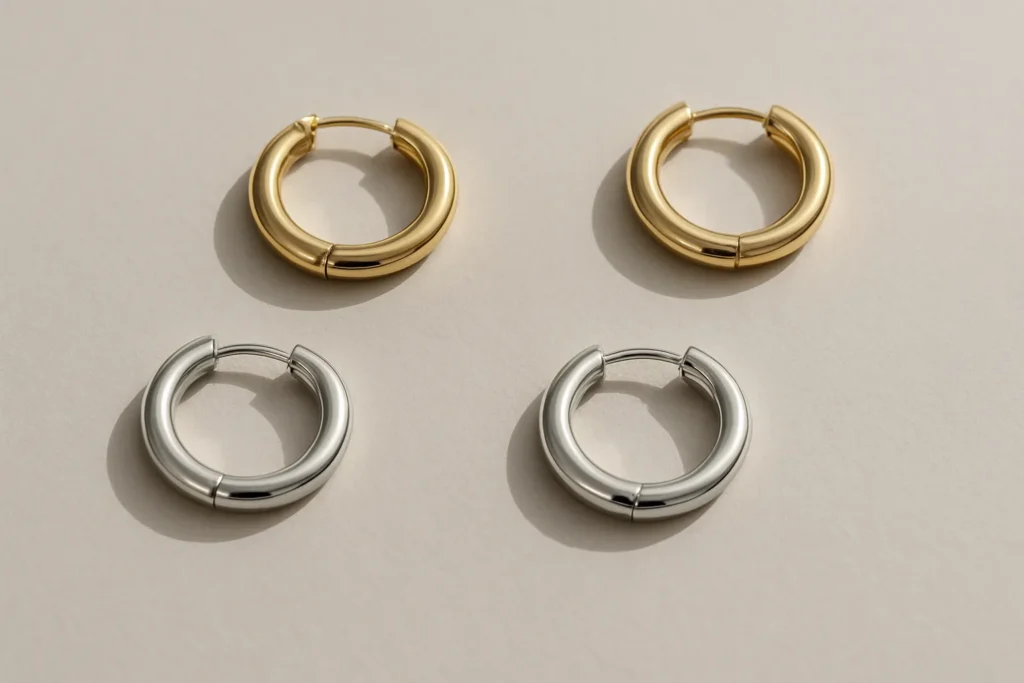
Official website editorial hoop reference. Gold-coloured and silver-coloured appearances illustrate the distinction between colour and a material declaration; these are not confirmed versions of the product-page pair.
Ask about the item, not the whole company range
The Earrings listing uses a generic product title and shows a decorative pair. It does not provide an item-specific metal or finish specification. Elsewhere on the page, the company’s broader description mentions steel materials and 18K gold plating across its fashion-jewellery range. Keep that company description separate from the information needed for this quotation.
Attach the selected product reference and ask the supplier to complete the material line for the offered version. This gives the reply a clear scope. A business may describe several materials in its range without using all of them in every earring, so the buyer should request the combination that belongs to the chosen item.
Separate the underlying material from the surface
Use one field for the component’s base material and another for the proposed surface finish. If the supplier uses a metal trade name or a grade designation, ask it to retain that exact wording and explain the relevant scope. Where plating is offered, request its description separately instead of shortening the entire component to a colour name.
Requested field
Supplier clarification
Purchasing purpose
Base material
Material name and any specified grade
Identify the underlying component specification
Surface finish
Finish or plating description for that component
Keep surface treatment separate from base material
Component scope
The parts covered by each statement
Avoid applying one declaration to the whole assembly
Reference
Item version, sample code and document date
Link the response to the quoted pair
If a value such as a plating thickness is required, request its unit, component scope, and supporting basis. Do not fill the field with a typical value from a different product or assume that an appearance sample supplies a numerical specification.
Actual Earrings product-page reference. The visible hoop form and decorative elements identify the pictured design; their base materials and finishes require an item-specific supplier description.
Map the material statements to actual components
Ask the supplier to identify the components present in the offered earring. Depending on the design, its response may distinguish the main body, closure parts, connectors, and decorative elements. Request the actual assembly description rather than requiring a parts list copied from another earring style.
For the pictured hanging design, a marked reference can help the supplier connect each material statement to the feature being discussed. Ask whether the same declaration applies throughout the metal assembly or whether individual parts differ. The supplier should describe the decorative elements separately from the surrounding metal when their identities matter to the purchase.
Keep the colour sample beside the written specification
A colour reference and a material description serve different purposes. The buyer can use an identified sample to discuss the appearance of a finish while retaining the written declaration for its material scope. Gold-coloured and silver-coloured catalogue images are useful visual references, but those colour words should not replace the supplier’s metal and finish fields.
Record which sample represents the chosen finish and ask the supplier to identify any proposed alternative separately. If the quotation is revised, check whether only the appearance reference changed or whether the underlying material or treatment description changed as well. Keep those decisions visible in the order record.
Official website editorial bow-earring illustration. It provides category context only, not proof of the supplier’s manufacturing process, offered SKU or the pictured components’ material.
Request evidence that matches the proposed claim
If the buyer needs supporting documentation, state the exact material or finish claim that needs support. Ask the supplier to identify the component, sample or item reference covered by its response. A general company document may provide background without answering a question about every part of the quoted pair.
Keep the evidence request proportionate to the purchasing decision. An appearance approval does not establish composition, and a composition declaration does not establish every performance claim. Where a separate evaluation is required, agree its scope and acceptance criteria before treating it as part of the approval. Avoid adding unrequested assurances to the final product wording.
Use the same component description for repeat orders
Retain the approved component map and material response with the item and sample references. For a repeat quotation, send that record back to the supplier and ask it to identify any proposed change. This is more precise than asking for the “same silver colour,” which leaves the material and finish description unstated.
Name the selected pair and the version being quoted.
Separate base material, finish, and applicable components.
Attach the supplier’s response and the appearance-sample reference.
Keep material substitutions distinct from appearance-only revisions.
Send the component questions through the supplier contact page. The fashion-jewellery articles offer general sourcing context; the item-specific supplier reply completes this material enquiry.
Frequently asked questions
Does a company description establish this pair’s material?
Request a reply for the selected product and components. A range description can cover materials and finishes that are not used in every offered item.
Is a silver-coloured earring necessarily silver?
Colour alone does not identify the material. Keep the appearance reference and the supplier’s base-material and finish declarations as separate fields.
What should change when a different finish is proposed?
Request the revised appearance reference and ask whether the material, treatment, or component scope also changes. Retain the updated specification with the quotation.
Wholesale earringsBase metalPlating specifications