
Earring Care RFQs: Request the Finished-Item Guide
What should a wholesale earring care-guide request cover? Ask the supplier for written care and handling information for the complete offered item, the product and finish versions it covers, and any limits concerning decorative parts or attachments. Link the accepted wording to the sample and quotation. A general metal description or a catalogue photograph does not establish a cleaning method for an assembled pair.
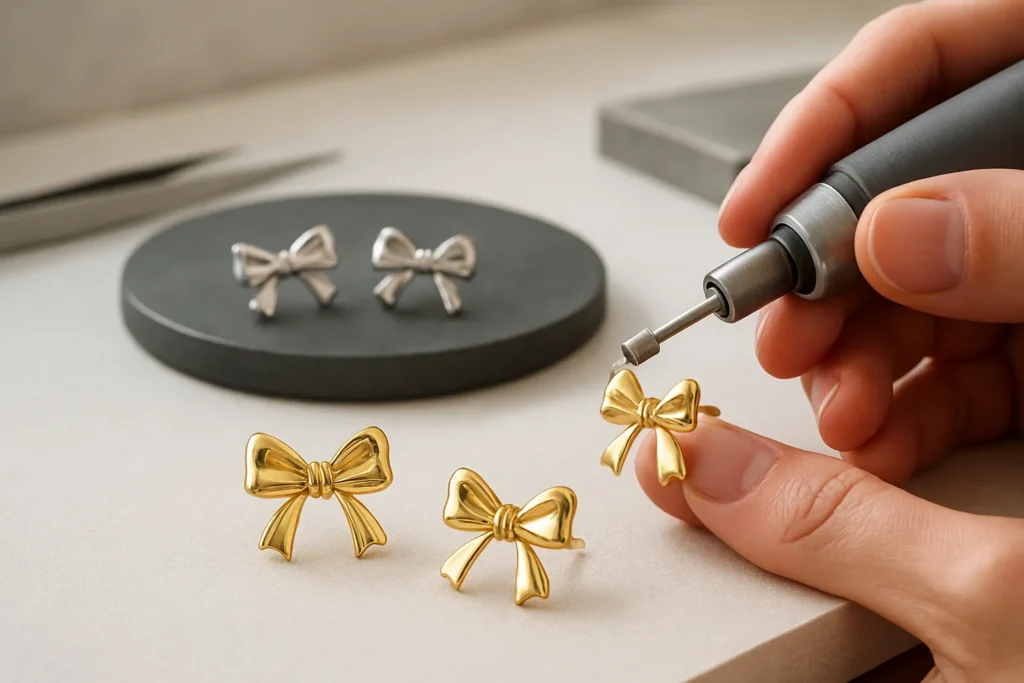
Official editorial earring-category illustration. The tool scene is not a care instruction, proof of the supplier manufacturing process or a confirmed offered SKU; request instructions for the actual selected item.
Identify the finished earring before requesting instructions
The Dingjia Earrings product page identifies an earring product and shows a decorative hoop-and-drop pair. The reviewed page does not provide item-specific cleaning or care instructions. This is a useful starting point for an enquiry: ask the supplier which complete item and proposed version its care information will cover.
Keep the selected product view, supplier item reference and quotation line together. If the supplier proposes another finish or a changed hanging detail, ask it to identify that version in the response. An instruction file attached to an email is still unclear when the buyer cannot tell which assembled earring it describes.
Website editorial images of bow earrings and plain hoops provide separate category references. They do not establish that those items are variants of the product-page pair or that one care method applies to all of them. Use the actual offered item as the reference for the finished-earring care guide.
Ask for complete-item coverage
For wholesale earrings, the care question concerns the assembled item that will be supplied. Ask whether the supplier’s instructions cover the visible decorative parts, surface finish, closures and other components of the offered version. These are areas for clarification, not a confirmed bill of materials for the catalogue pair.
Where the supplier provides information about a base material or a finish, ask how that information relates to its finished-item recommendation. A company-level description of stainless steel or plating should not silently become the care specification of every listed earring. Keep the supplier’s item-specific explanation with the proposed instructions.
If the supplier identifies a component that needs different handling, ask it to explain the applicable scope in its own instructions. The buyer should not have to combine unrelated material advice and guess how to apply it to a decorated, assembled piece. Record unanswered scope questions before preparing customer-facing copy.
Buying field
Requested supplier response
Offered item
Supplier code, selected product view, finish version and quotation line.
Instruction source
Supplier care document or written recommendation and its applicable item scope.
Cleaning information
The supplier-supported method and any stated restrictions for the complete item.
Handling and storage
Applicable supplier recommendations, with any component-specific limits identified.
Proposed customer copy
Exact text or artwork version and the person responsible for reviewing its meaning.
Sample and revision link
Which offered sample the wording covers and when a change requires reconfirmation.
Actual Earrings product-page reference. Request the supplier care guide for the complete proposed pair; the image does not establish its materials, permitted cleaners or attachment performance.
Request the supplier method without inventing missing steps
Ask the supplier to provide the cleaning, handling and storage information it supports for the offered finished earring. Where it gives a recommendation, request enough context to understand what item, finish and decorative arrangement it covers. Retain the original wording as part of the purchasing record.
This enquiry does not prescribe a cleaning chemical, soaking time, appliance, polishing technique or storage condition. Those details are not established by the reviewed product page. If the supplier’s response omits a point the buyer needs, ask a specific follow-up question rather than filling the gap with advice written for another jewellery item.
A care illustration can help explain supplied instructions when its applicability is clear. The editorial tool scene shown here is an earring-category image, not a demonstration of cleaning or repair. Ask for an applicable supplier illustration or explanation where the buying team needs one; do not turn an unrelated photograph into an operating step.
Prepare retail copy from the identified supplier response
A retailer or distributor may need care text for a card, an online product page or another product-information format. Tell the supplier how the information is intended to be used and ask which wording it can support for the offered item. Do not assume that a printed card, translation or custom artwork is included in the quotation.
Keep instruction meaning and visual presentation easy to review separately. The responsible reviewer should be able to identify the supplier source behind each proposed statement. An artwork approval can confirm the arrangement of words without establishing that every sentence applies to the actual pair.
Where another language or a shorter version is proposed, retain its association with the original supplier response. Ask the appropriate reviewer to confirm that the scope has not changed. Avoid adding a lifetime, tarnish-resistance or other performance promise simply to make the care card sound more complete.
Separate official editorial hoop reference. Its appearance does not identify the care instructions, material composition or supplied variants of the product-page pair.
Link the care guide to samples, changes and reorders
Keep the accepted care text with the selected sample and supplier item reference. Record which finish and decorative version the supplier identified, which file the buyer reviewed, and any question left open. The people preparing product information should be able to find the same accepted reference as the purchasing team.
If a decorative part, closure, finish or other offered feature changes, ask whether the care recommendation remains applicable. Preserve the earlier record as history and request an identified response for the revised proposal. A familiar product name should not automatically carry old instructions into a changed item.
This care-guide enquiry complements the separate exact-pair and material-declaration discussions. Its deliverable is supplier-supported finished-item wording with clear applicability. Send the chosen reference and missing instruction fields through Dingjia contact; see the jewellery buying blog for related sourcing questions.
Identify the complete offered pair and applicable supplier guide.
Clarify the finish and decorative-component coverage.
Retain accepted wording with the sample and item version.
Buyer FAQ
Can a company material statement supply the care instructions?
No. Request the supplier recommendation for the complete offered earring and the item and finish versions it covers.
Do the editorial hoop and bow images show the same SKU?
They are separate category references. Use the selected product-page item and supplier code to define the actual instruction scope.
Should missing cleaning steps be copied from another jewellery guide?
Ask the supplier to clarify the applicable method. Keep an information gap visible rather than inventing a finished-item instruction.
Does approval of a care-card layout confirm its meaning?
Identify the instruction source and responsible content reviewer separately from the decision about the visual layout.
What should happen when the offered item changes?
Ask whether the guide remains applicable, retain the previous reference, and identify the supplier response covering the revised item.
wholesale earringsB2B supplier sample record